
Shipping risks in the Middle East are intensifying, and inflation is persisting in the United States. Asian stocks fell on Friday, and Iran-backed Houthi rebels seized a key strait vital to global commerce. Simultaneously, US data showed inflation remains above Federal Reserve targets, fueling bets on interest rate hikes.
The Houthi group completed its takeover of the Bab al-Mandab Strait and Mayyun Island on Friday. The seizure follows a week-long offensive that killed hundreds of people and displaced about 46,000. Bab al-Mandab serves as the southern gateway to the Red Sea and the Suez Canal, a route essential for international trade.
The fighters have been targeting Saudi tankers since July. Now, the capture of Mayyun Island, located in the middle of the narrow waterway, gives them a stronger position to launch attacks. Saudi Arabia, the world’s largest oil exporter, relies heavily on the Red Sea for shipments, especially since Iran’s blockade of the Strait of Hormuz.
Farea Al-Muslimi, a research fellow at the Chatham House think-tank, told AFP that the Houthis’ advance gives Iran control over the second most strategic chokepoint in the Middle East. Mohammad Mokhber, an adviser to Iranian Supreme Leader Mojtaba Khamenei, congratulated the group on its “resounding victory.”
Hazem al-Assad, a member of the Houthis’ politburo, sought to allay fears for global shipping. He told the Al-Araby al-Jadeed news outlet that “there is no cause for international concern” and that “freedom of navigation and international trade in the Red Sea and Bab al-Mandab are safe and orderly.”
War drags on in Yemen and oil prices rise
The conflict in Yemen is a brutal civil war that began when the Houthis took over the capital Sanaa in 2014. This week, the group carried out its heaviest missile and drone attack in years against Saudi Arabia, setting oil sites ablaze and wounding 73 people. Satellite images showed black smoke billowing near Medina along the route of a pipeline carrying Saudi oil to the Red Sea coast.
The Houthis have seized several areas recently, including the port city of Mocha and Zuqar island north of the Bab al-Mandab. A witness fleeing Mocha described an “apocalyptic” atmosphere in the historic city. While Saudi Arabia has hit back with airstrikes and ordered reinforcements, it has failed to stop the group’s advance.
Oil prices have soared past $100 a barrel this week, with the US benchmark West Texas Intermediate hitting a peak of more than $104. Brent oil briefly touched $110 per barrel on Friday, its highest level since May. These price increases are likely to persist as the war shows no sign of ending.
Read Also: Modi to Host Putin, Xi for CBDC Talks
While prices dropped more than 3% in afternoon trade, they remain well above the $78 and $74 levels seen last week. Investors are bracing for another surge in inflation that will put pressure on central banks to tighten monetary policy.
India handles energy and trade ties
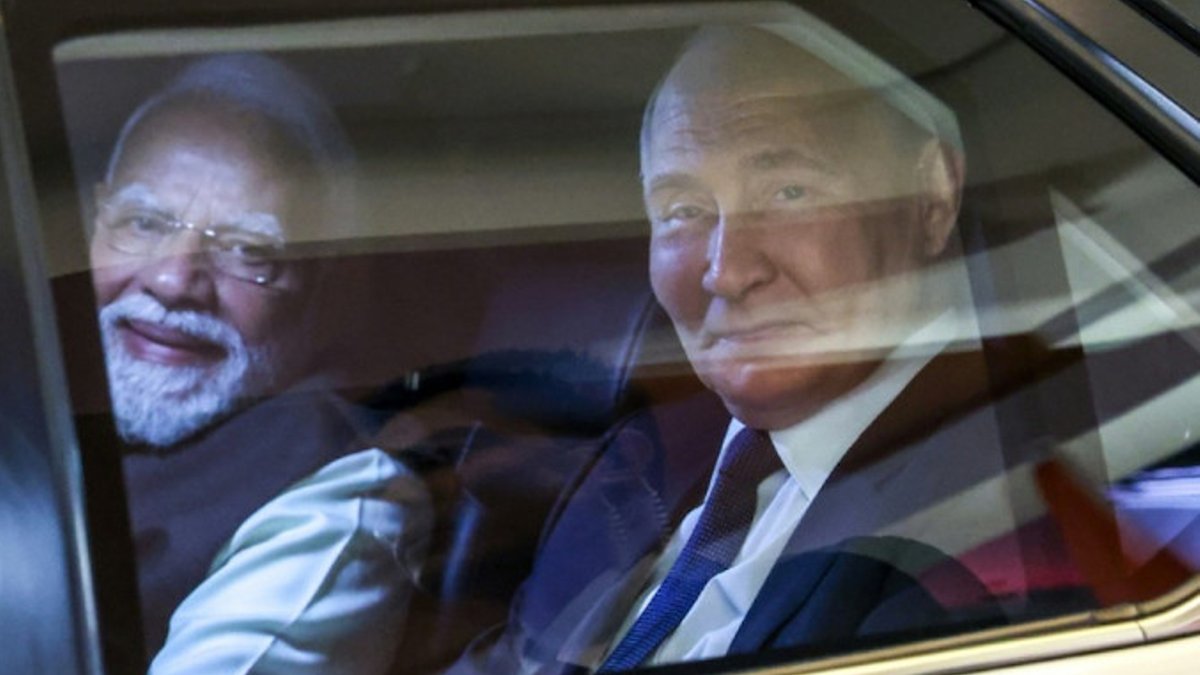
India has worked through the energy crisis caused by the Middle East war in part by turning to Russia. Moscow is one of New Delhi’s most important strategic partners and military suppliers. Russian President Vladimir Putin and Indian Prime Minister Narendra Modi adopted on Friday before talks on trade, energy, and defense.
Modi reiterated that “dialogue and diplomacy was the way forward in resolving conflicts” during the meeting. The leaders discussed the impact of the Middle East war on “maritime trade and the safety and security of Indian seafarers.” With more than 320,000 seafarers, India makes up a major part of the global merchant shipping workforce.
Shipments from Russia to Indian refiners nearly doubled in March, the weeks after the Middle East war erupted. Imports rose sharply to 2.71 million barrels per day in June and a record 2.81 million in July. While imports fell to 2.07 million barrels per day in August, they remained significant.
Markets react to geopolitical tension
Asian stocks sank on Friday after oil prices and bond yields spiked. Tokyo and Seoul were among the worst hit, with the Nikkei down 1.9% and the Kospi falling 1.76%. Hong Kong, Shanghai, Sydney, and other major markets also suffered heavy selling.
Crude prices have soared around 30% over the past week as the US and Iran exchanged strikes around the Strait of Hormuz. The 30-year US Treasury yield reached 5.36%, a new post-2007 peak. The 10-year yield is close to 5% and nearly at a 19-year high.
Government bond yields have jumped again this week, reflecting fears of higher inflation. The European Central Bank lifted rates on Thursday and warned of an extended period of rising prices. The Federal Reserve’s policy meeting next week is a major focus for investors.
With the war showing no sign of ending, investors are bracing for another surge in inflation that will put pressure on central banks to tighten monetary policy further. This economic uncertainty is likely to keep global markets volatile in the coming weeks.


Leave a Reply