
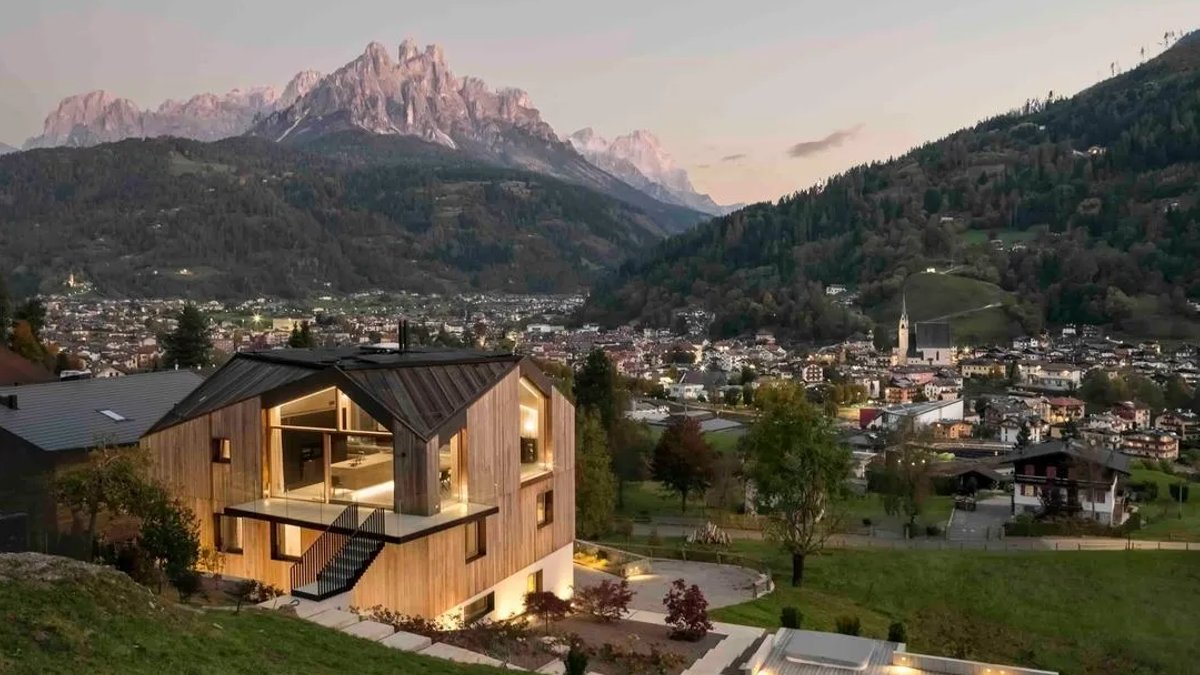
Daniele Lago, founder of the Venetian furniture company LAGO, has created a residence in the Dolomites that merges architecture with its natural surroundings. Positioned on a sun-drenched slope with views of the rugged Primiero peaks, the property—Casa Lago Dolomiti—was not designed as a temporary guesthouse but as an organic extension of the mountain environment. Architect Giorgio Zaetta led the project, combining a sleek four-story chalet, a restored wooden farmhouse, and outdoor areas tailored for seasonal use.
The concept stems from Lago’s deep roots in hospitality. Growing up as the youngest of ten siblings in a Paduan household where his mother always left an extra seat at the table, he sought to replicate that communal spirit in the Alps. Unlike many alpine retreats, which function only as seasonal getaways, Casa Lago Dolomiti is intended as a permanent center for creativity and social interaction.
Glass Walls Frame Alpine Peaks
The structure’s most notable aspect is its harmonious blend with the environment. Floor-to-ceiling glass panels frame the Pale di San Martino peaks, integrating them into the interior. The use of wood, light, and transparent materials creates an open, almost ethereal atmosphere, a design approach Lago has applied across his furniture collections. The result is a building that does not dominate the environment but instead enhances it.
Read Also: Chinese Auto Makers Put AI-Controlled Features Into Production
This environmental integration extends to the home’s construction. Casa Lago Dolomiti earned ARCA Silver certification for its high-quality wooden finishes and CasaClima certification for energy efficiency, demonstrating Lago’s dedication to sustainability. These certifications reflect a conscious effort to minimize environmental impact, particularly in a region where tourism often prioritizes visual appeal over ecological responsibility.
Primiero Valley: Year-Round Alpine Community
The valley of Primiero, where the home is located, stands out compared to other alpine destinations. While many mountain towns become nearly deserted in winter due to seasonal tourism, Primiero retains its year-round population. Mayor Daniele Depaoli highlights that the valley is more than just a tourist backdrop; it is an active community. “We invite those who wish to engage with us, not just those who pass through,” he stated. This authenticity attracted Lago, who saw in Primiero a place where architecture and local culture could coexist without erasing traditional identity.
The home’s design embodies Lago’s vision of shared living. Interior collaborations include partnerships with brands like Canyon Bicycles, which transformed the garage into an outdoor activity center, and Lanerossi, whose textiles appear in bedrooms and bathrooms. Additional contributors such as Philips, De’Longhi, and Abus ensured that functionality and innovation define the space. Every detail, from lighting to furniture, was selected to promote interaction rather than isolation.
Read Also: Classic tailoring teams with denim this autumn
Casa Lago as Hub for Sustainable Living
Currently, access to Casa Lago Dolomiti is limited, but Lago envisions it as a dynamic platform for rethinking human habitation. The property will host design workshops, discussions on sustainable living, and gatherings that dissolve the distinction between host and guest. The home’s philosophy is encapsulated in a phrase inspired by Swedish writer Axell Munthe: “This house is open to the sun, to friends, and to the wind.” In a region where luxury often translates to exclusivity, Lago’s creation offers an alternative, a space built for meaningful connections.
Beyond its immediate impact, the property reflects a larger cultural movement in the Dolomites. Traditional mountain architecture often emphasizes self-sufficiency, and Lago’s work builds on that heritage while incorporating modern innovations. The integration of local craftsmanship, such as the use of reclaimed wood and traditional stonework, further strengthens the connection between the building and its surroundings. This approach not only preserves regional identity but also sets a new standard for sustainable hospitality.


Leave a Reply