
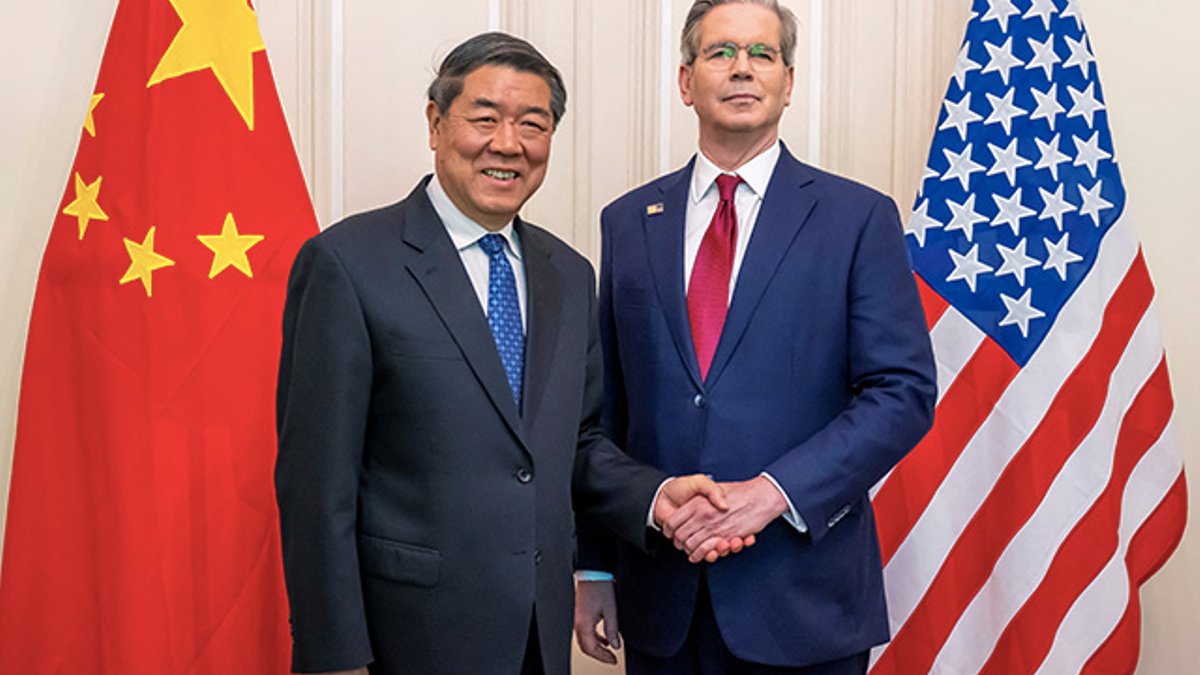
The confirmation of Chinese President Xi Jinping’s upcoming state visit to Washington from Wednesday to Friday sparked a rise in Asian stock markets on Monday. Reports of productive trade talks between the United States and China, led by US Treasury Secretary Scott Bessent and Chinese Vice Premier He Lifeng, set expectations for potential agreements on trade, artificial intelligence, and broader strategic issues.
Bessent described the eight-hour New York discussions as highly productive, emphasizing progress toward establishing a US-China AI dialogue to address security threats. This mechanism will allow both governments to notify each other of incidents, marking a rare collaborative effort in a relationship plagued by deep divisions. Officials from both sides planned further working-level meetings on Monday to address trade, technology, and rare earth mineral supplies.
Trade Talks Spark Hope, But Tensions Persist
Beijing sought to reassure markets about economic stability with Washington, with Chinese state media characterizing the talks as candid, thorough, and constructive. US officials stressed the need for cooperation on AI development and supply chain security. Xi’s visit, including a formal welcome at Joint Base Andrews, highlighted the urgency of resolving outstanding issues before tensions deepen. However, major obstacles remain. Trump’s stance on Iran and Taiwan tensions continue to strain relations.
China, a key economic partner of Iran, has resisted US sanctions while purchasing a large share of Tehran’s oil output. Analysts, including former US deputy secretary of state Kurt Campbell, predict only a temporary truce from the Trump-Xi summit. China’s warnings over Taiwan—where a $14 billion US arms sale is under review—add further friction. Beijing has previously used control over rare earth exports to pressure Washington on trade disputes.
Market reactions reflected cautious optimism. Hong Kong’s Hang Seng Index climbed 1.2%, while Shanghai’s composite advanced 1%. South Korea’s tech-heavy Kospi index rose 1.7%, driven by investor confidence in AI-driven growth. Tokyo’s markets were closed for a holiday, and Sydney’s index remained unchanged. Oil prices dipped slightly on hopes of restored crude shipments from Saudi Arabia, though both Brent and West Texas Intermediate contracts stayed near $100 per barrel, indicating ongoing geopolitical risks.
AI Dialogue and Rare Earths in Focus
The Bank of Japan’s recent interest rate hike, its first in three decades, introduced new complexities in global monetary policy. While the move was anticipated, the yen weakened against the dollar, signaling concerns about slower tightening. Analysts suggested that any Chinese cooperation on Iran would be the most significant outcome of the Trump-Xi talks, though Beijing’s past reluctance to engage limits expectations. Traders now focus on Xi’s arrival in Washington, where he will meet Trump amid heightened tensions over trade, technology, and regional security. The success of the talks depends on whether concrete results emerge or if the stalemate continues.
Related Post: US Confirms Space Weapons, China, Russia Warn Against Militarization
The US-China AI dialogue will function as a formal notification system for security-related incidents. Bessent confirmed that the mechanism would enable both governments to exchange information on threats. The framework, agreed during the New York talks, includes provisions for follow-up meetings between technical experts. US Trade Representative Jamieson Greer emphasized transparency in AI development, particularly in high-risk areas. Chinese officials, including newly appointed trade representative Li Chenggang, indicated willingness to discuss guardrails for AI while reaffirming Beijing’s stance on technology governance sovereignty.
Beyond AI, discussions covered the potential renewal of a trade truce, though no formal extension was announced. US officials stated they would monitor China’s compliance with previous commitments, including agricultural purchases, to determine further concessions. Rare earth minerals remained a key focus, with Washington seeking supply stability assurances for critical industries. A source close to the discussions noted that working-level negotiations on minerals and trade would continue into Monday, though no immediate breakthroughs were expected.
State Visit Aims for Stability, Not Breakthroughs
Xi’s arrival in Washington on Wednesday marks the first state visit by a Chinese leader since 2017. Trump will host a formal welcome at Joint Base Andrews, with private meetings scheduled for Thursday. Trump stated he would discuss trade, technology, and regional security, while Beijing’s foreign ministry spokesman, Guo Jiakun, framed the visit as an effort to strengthen constructive strategic stability. Analysts describe the summit’s prospects as modest, with no formal trade deal or AI agreement expected. The focus will likely be on managing tensions rather than resolving them.
Trump’s approach to the talks aligns with his broader strategy of using economic pressure, including the $14 billion Taiwan arms sale under review, as bargaining tools. China’s warnings over Taiwan, delivered by top diplomat Wang Yi in July, highlight Beijing’s sensitivity to US support for Taipei. The arms sale, which Trump described as a strong negotiating position, complicates efforts to ease trade frictions. China’s historical use of rare earth exports as leverage, successfully pressuring the US to reduce tariffs last year, remains a key factor in diplomatic negotiations.
Despite the expected 25-basis-point increase, the yen weakened against the dollar, as traders questioned whether further tightening would follow. Analysts at Capital Economics noted that Chinese cooperation on Iran would be the most impactful outcome of the Trump-Xi talks, though Beijing’s past reluctance to engage suggests limited progress. Oil volatility, driven by the US-Iran conflict, continues to influence markets, with West Texas Intermediate settling at $98.34 per barrel and Brent at $101.78.


Leave a Reply