
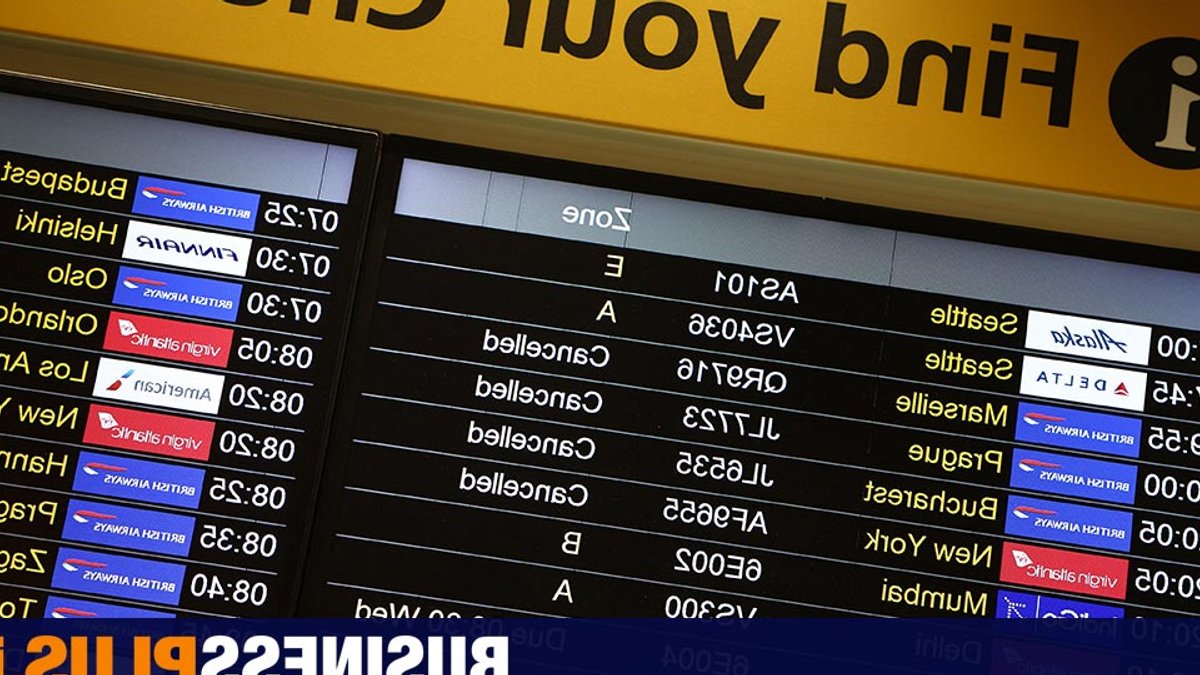
A technical issue at the UK’s air traffic control provider, Nats, caused widespread travel disruption yesterday, with more than 50 flights serving Irish airports cancelled. The chaos rippled across Europe, affecting major hubs like London Heathrow, Glasgow, Birmingham, and Edinburgh, with Manchester Airport seeing over 90% of its flights axed.
The problem, which began at 1pm and was resolved by 5pm, led to the cancellation of over 625 flights to and from the UK, primarily affecting British Airways and EasyJet. The issue stemmed from a malfunction in Nats’ “flight processing system,” though the exact cause remains undisclosed.
Irish airports bear the brunt
Dublin Airport was hit hard, with 23 outbound and 21 inbound flights cancelled, according to its operator, DAA. Other flights experienced significant delays, leaving passengers stranded and frustrated. Cork Airport also felt the impact, with five inbound and four outbound flights scrapped, including services to London Stansted, Birmingham, Heathrow, and Amsterdam. The cancellations disrupted travel plans for thousands, with many facing uncertainty about rebooking options.
Passengers face lengthy delays
The disruption caused chaos for passengers, with many facing lengthy delays. Ryanair stated that over 65,000 passengers had their travel plans disrupted, with some customers experiencing delays of up to eight hours. The airline’s chief, Neal McMahon, called on the UK government and civil aviation authority to hold Nats accountable, criticizing the lack of transparency and accountability.
One passenger, Josie Donoghue, described her experience as “like trying to get out of Alcatraz“. She spent three hours on the runway at Gatwick Airport before deciding to disembark, only to face further delays trying to leave the airport. The healthcare worker, who was traveling to Shannon, expressed frustration over the lack of communication from airline staff, who seemed reluctant to provide updates on the situation.
The issue also affected flights from Ireland to other destinations, as they were unable to safely handle over mainland UK to Europe during the air traffic control malfunction. This created a domino effect, impacting routes across the continent and exacerbating delays for international travelers.
While the problem was eventually resolved, it highlighted the vulnerability of air travel to technical issues and the potential for widespread disruption. The incident serves as a reminder of the complex network of systems that underpin modern air travel, and the need for robust contingency plans to minimize the impact of such events on passengers. It also showed the importance of clear and timely communication during crises.
Airlines respond to the crisis
Aer Lingus and Ryanair both faced a wave of complaints from disgruntled passengers on social media. Aer Lingus stated it was “monitoring the situation” and contacting affected customers directly, offering updates on travel options. Ryanair called on the UK government and civil aviation authority to hold Nats accountable, emphasizing the need for systemic improvements to prevent future disruptions.
Read Also: Taylor retirement fight breaks box office records
Nats identified the issue as a problem with its “flight processing system” but provided no details on the cause. A spokesman ruled out a hack or cyber incident, but the lack of information left many passengers and industry observers frustrated. The opacity surrounding the issue fueled speculation and added to the confusion experienced by travelers.
Despite the disruption, some observers noted that the timing could have been worse. Travelextra.ie’s Eoghan Corry pointed out that the issue occurred during a relatively quiet period, avoiding the heavier morning wave of flights at Heathrow. “A really heavy wave goes through Heathrow in the morning, so this is good timing for most Irish people who will have been returning home from trips,” he said.
Wider impact on European travel
The disruption was not limited to the UK and Ireland, with flights to and from other European destinations also affected. Corry noted that flights to France, Belgium, and Amsterdam were among those impacted, while services to Spain and the Canaries were largely unaffected. The incident highlighted the interconnectedness of European air travel and the cascading effects of localized disruptions.
As the dust settles on this incident, questions remain about the resilience of air traffic control systems and the need for greater transparency in the event of technical issues. With air travel expected to rebound in the coming months, ensuring the reliability and safety of these systems will be key to avoiding similar disruptions in the future. The incident also sparked discussions about the role of regulatory bodies in overseeing critical infrastructure.
The incident also shows the importance of effective communication during times of crisis. Passengers like Donoghue were left frustrated by the lack of information, highlighting the need for airlines and air traffic control providers to keep travelers informed and updated during delays and cancellations. Clear communication could have mitigated some of the frustration and confusion experienced by passengers.
As the aviation industry continues to work through the challenges of the post-pandemic era, incidents like this serve as a reminder of the complex interplay between technology, infrastructure, and human factors that underpin modern air travel. The sector must balance technological advancements with robust contingency planning to ensure passenger safety and satisfaction.
Yesterday evening, Nats announced it had “implemented a fix” for the issue, but the impact of the disruption will be felt for some time. With thousands of passengers affected and dozens of flights cancelled, the incident is a stark reminder of the fragility of air travel and the need for constant vigilance to ensure the safety and reliability of the system. It also shows the importance of learning from such events to build a more resilient aviation network.


Leave a Reply