
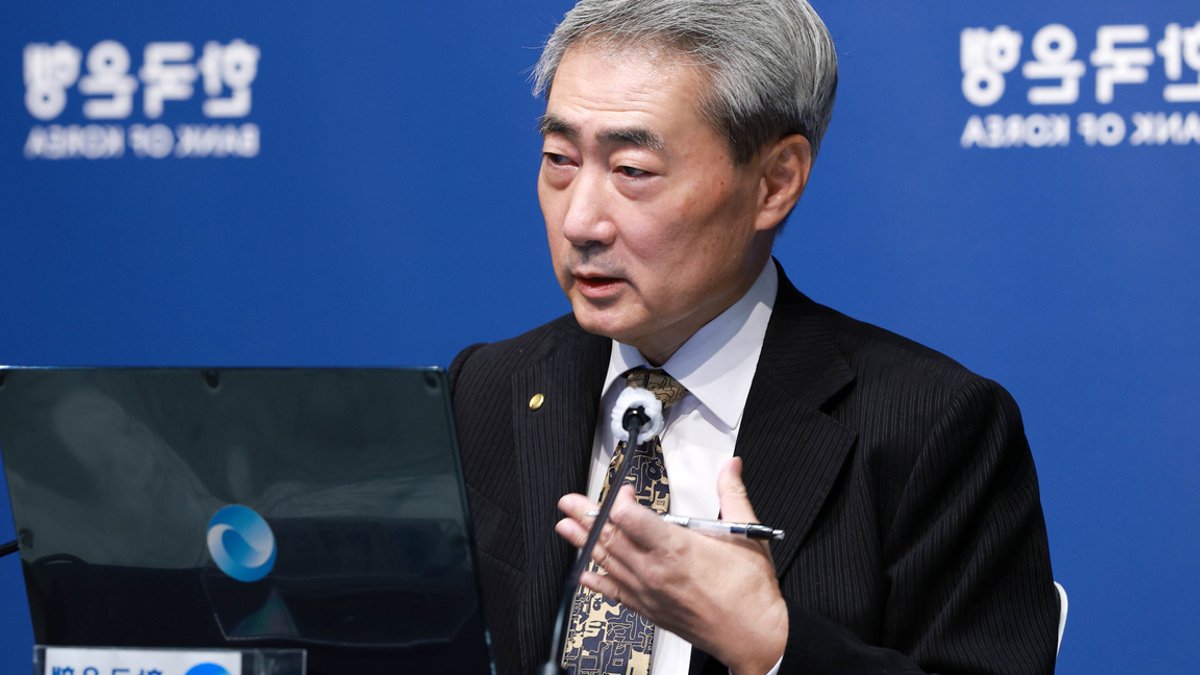
The Bank of Korea kept its benchmark interest rate unchanged at 3% on Thursday, ending a two-month streak of 25-basis-point increases in July and August. Policymakers faced conflicting signals: economic growth and inflation had outperformed forecasts, leaving them uncertain about whether tighter monetary policy was still necessary.
The Monetary Policy Board’s unanimous vote to hold rates came after Governor Shin Hyun-song stated that the current restrictive stance would remain until inflation showed definitive signs of easing. He acknowledged that earlier rate hikes had begun to cool housing market activity and reduce financial risks. S. Federal Reserve’s September rate hike—had not destabilized Korean financial markets.
Shin cited slower growth in home prices and a decline in the financial vulnerability index as early evidence that monetary policy was working. The central bank will now evaluate third-quarter economic performance and October inflation figures before its next meeting. While the pause does not rule out further tightening, Shin left the door open to additional rate increases if conditions deteriorated.
Korea’s economic outlook remains buoyed by semiconductor demand, with exports on track to exceed $1 trillion this year. The current account surplus has already hit $279.2 billion through August, nearly four times the $69.67 billion recorded in the same period last year, and is projected to surpass $450 billion annually. Despite weaker consumer spending due to stock market corrections and labor disruptions in the auto sector, Shin emphasized that the broader economic recovery remained on course.
Inflation continues to pose the biggest challenge, with consumer prices rising 2.9% year-over-year in September, down from 3.1% in August but still above the Bank of Korea’s 2% target. Rising oil costs, driven by the Middle East conflict, have pushed Brent crude to $112 per barrel, the highest level in five months. The central bank expects headline inflation to average 2.7% this year, while core inflation, excluding food and energy, is projected at 2.5%, aligning with previous forecasts.
For 2027, the Bank of Korea forecasts headline inflation at 2.3% and core inflation at 2.5%, though Shin warned that core prices could climb further. He cautioned that persistent inflation could delay the return to the 2% target until around 2028, pointing to upward pressure from producer prices, which jumped 7.7% year-over-year in September. Consumer inflation expectations have held steady at 2.7% for three months, signaling deep-rooted price concerns.
The government’s oil price cap has helped ease inflationary pressures, but Shin noted that extending the measure risks distorting markets, discouraging energy efficiency, and straining public finances. The central bank must now balance these trade-offs against the need to control inflation.
The South Korean won has recovered from its earlier sharp decline, though it remains weaker than historical averages. The currency’s effective exchange rate, measured by the Bank for International Settlements, now stands at approximately 101, up from around 89 at the end of August when the dollar traded near 1,380 won. Shin stressed that exchange rate stability is critical for lower-income households, where a 10% appreciation could increase purchasing power by over 0.4% and help reduce inequality.


Leave a Reply