
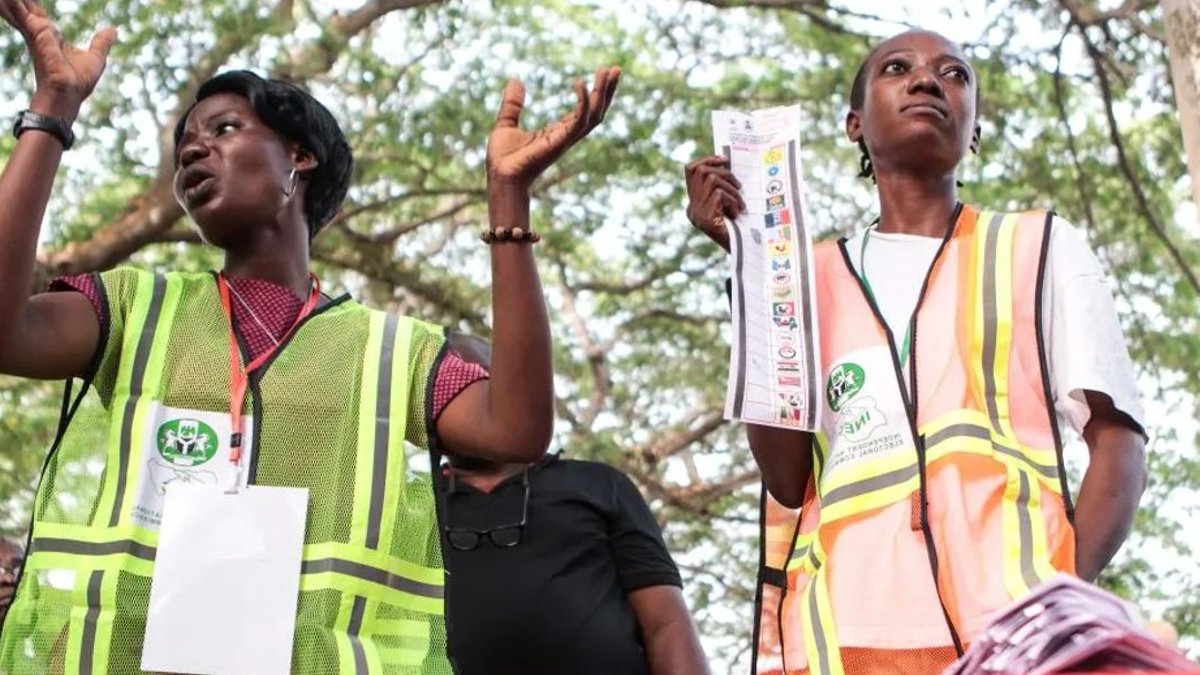
On August 16, Nigeria’s Osun state governorship election saw a quiet revolution. Civil rights groups and individuals deployed AI-powered digital platforms to track and verify results as they were uploaded by the electoral commission.
These tools bypassed the vulnerable manual collation stage, where manipulation often occurs. A network of civic platforms accurately predicted the winner hours before the official announcement, using independent parallel vote tabulation. Their figures matched the commission’s final results with impressive accuracy.
This development holds significant implications for Kenya as it heads into the 2027 general election. Kenya isn’t starting from scratch. In 2022, the Elections Observation Group deployed 5,000 observers across constituencies, with 1,000 trained in parallel vote tabulation (PVT). Their projections aligned with the official presidential results.
Kenya’s electoral commission has previously allowed parallel tallying centers for media and civil society, while retaining the sole authority to declare winners. The Nigerian model builds upon this foundation, replacing slow human collation with AI-driven optical character recognition (OCR) that reads result forms directly and flags anomalies in near real-time.
This addresses a critical gap in Kenya’s electoral process: the lag between polling station results and national tallying, where disputes over Forms 34A/34B have fueled post-election litigation. AI can scan uploaded forms instantly, cross-check figures against a representative sample, and identify discrepancies before they escalate into contested claims.
Kenyan election technology observers anticipate the use of AI-powered anomaly detection and OCR tools in 2027, alongside blockchain audit trails for verification. Opposition figures like Kalonzo Musyoka have already vowed to build an independent, tech-driven parallel tallying system for 2027, insisting agents will capture and relay polling-station results directly rather than rely solely on IEBC’s process.
However, partisan-run AI tallies risk becoming tools for manipulation rather than transparency. The Nigerian model’s success stemmed from its reliance on non-partisan civic actors.
Kenya‘s 2022 election, despite convergence between official and independent PVT results, still faced a Supreme Court challenge.
Nigeria’s Osun experiment suggests that the solution lies not just in more observers, but in faster, technically credible verification that prevents disputes from arising in the first place. If Kenyan civil society, election observers and faith-based coalitions can replicate that AI-assisted model by 2027, they won’t just watch the count. They’ll help settle it in real time.


Leave a Reply