
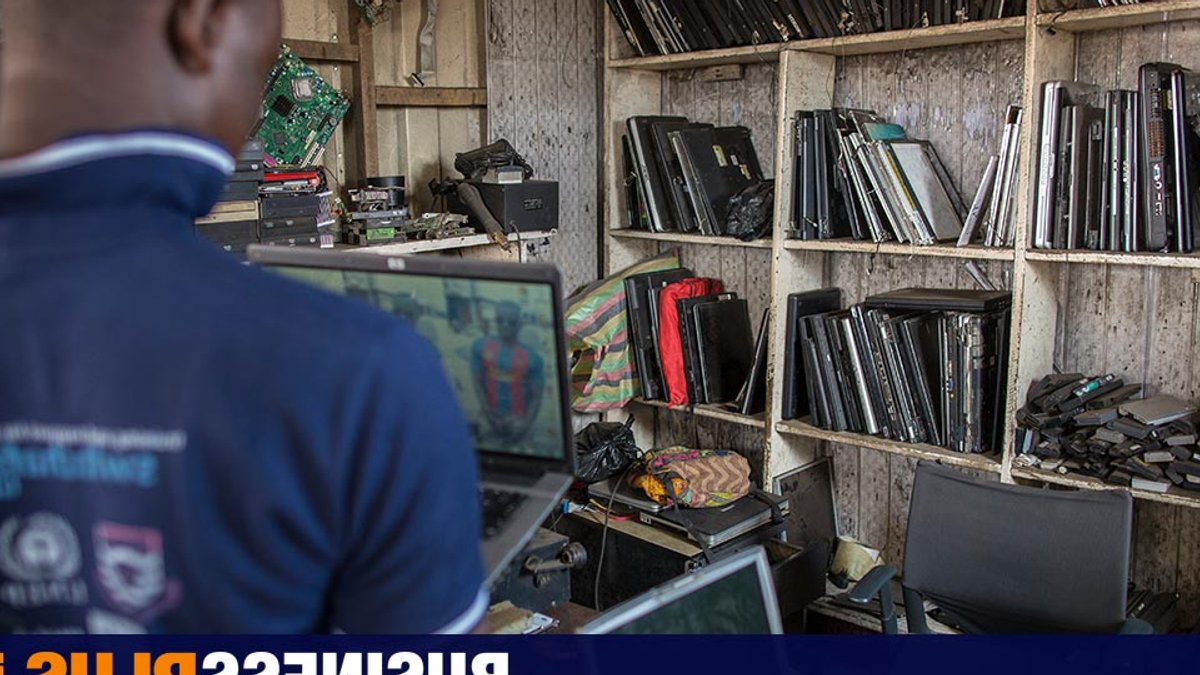
Last March, Kilian Kaminski, co-founder of refurbed, had the opportunity to travel to Ghana to visit Accra and the Old Fadama, an area previously known as Agbogbloshie, to better understand where discarded electronics end up and how repair and recycling activities are evolving there.
The aim was to see firsthand how Ghana handles e-waste, one of the world’s largest sites of imported electronic waste.
Europe’s Consumption Model
According to Kaminski, Europe talks about the circular economy as a future ambition, but Ghana practices it every day out of necessity.
Europe celebrates right-to-repair laws, circular economy strategies, and sustainability targets, but Ghana is actively extending product lifespans, recovering materials, and repairing devices Europe has discarded.
The consequences of this consumption model must be acknowledged, so that rhetoric is matched with responsibility, Kaminski notes.
E-Waste in Ghana
Far less of what arrives in Ghana is genuinely waste than you might think — studies suggest only around one in ten devices is beyond repair.
This e-waste is handled by two sectors: a formal licensed economy and a sophisticated informal economy, where most of the work happens.
Understanding the informal sector is important to grasp the full extent of the harm caused by European devices being discarded in Ghana.
Related: Caitriona Ryan defies age with the help of science
Thousands of Ghanaians depend on this work, and to see them as passive victims of Europe’s wasteful habits is too simplistic and far removed from reality.
Towards a Fair System
Ghana is seeking a fair system where countries take responsibility for their waste by raising awareness and creating safer working conditions in the places it ends up.
The volume of waste in Europe makes it impossible to solve the problem in Ghana without external support.
And refurbishing devices is not enough on its own — consumption habits need to change along with European export regulations and infrastructure support given to Ghana’s circular economy.
Irish consumers are already moving in this direction, with almost half of the refurbished phones sold in Ireland now bought with a new battery — a sign people want technology that lasts, not just a lower price.
Kaminski’s company, refurbed, is backing a formal recycling facility in Ghana with Minimise and Electro Recycling Ghana to move informal workers into safer, regulated processes.
The goal is, and must continue to be, to ensure nothing goes to waste, leveraging the local knowledge and passion found in Accra and the former Agbogbloshie area to help build a more sustainable system.


Leave a Reply